Heat pump noise: how loud are they, and what UK rules apply?
Modern heat pumps run at 40-50 dB at 1m — quieter than a fridge. Permitted-development rules cap noise at the neighbour boundary. Here is what to expect.
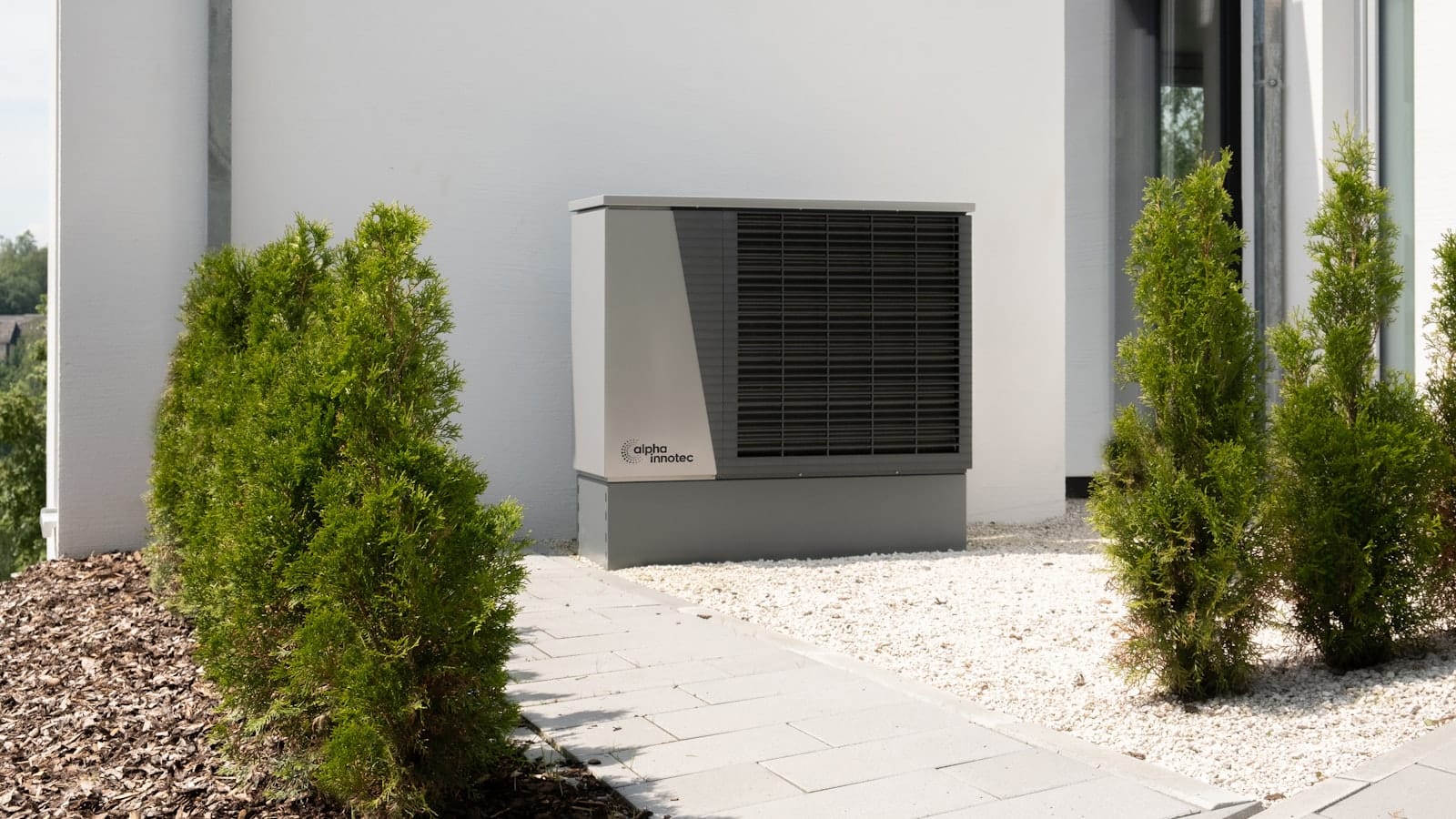
The "heat pumps are noisy" objection is mostly a hangover from 10-year-old units. A modern heat pump runs at 40-55 dB at 1 metre — about as loud as a quiet conversation, and quieter than the boiler in most kitchens. Sited correctly, your neighbours will not hear it.
The numbers
Common decibel comparisons:
- 20 dB — whisper
- 40-50 dB — modern heat pump at 1m, fridge running
- 50-60 dB — normal conversation
- 60-70 dB — heat pump at 1m running flat-out on the coldest day
- 70-80 dB — vacuum cleaner
Sound drops by 6 dB every time you double the distance. So a 50 dB unit at 1m is 44 dB at 2m, 38 dB at 4m. A neighbour 5m away across a fence hears it at a level somewhere between rustling leaves and a quiet office.
What the rules actually say
Heat pumps qualify as permitted development in England (so no planning application needed) provided they meet the MCS Planning Standards. The relevant noise rule:
- Sound at 1 metre from the neighbour's nearest habitable window must not exceed 42 dB(A) — calculated using the MCS-020 method.
For most installs that means siting the unit at least 1-3m from the boundary, depending on which model and how reflective the surrounding walls are. Your installer should run the MCS-020 calculation as part of the quote and provide a compliance certificate.
Wales, Scotland, Northern Ireland
- Wales: permitted-development rules updated in 2023 — broadly similar to England. Some restrictions in conservation areas.
- Scotland: permitted development with more permissive thresholds (1m from boundary, no specific dB limit at the boundary).
- Northern Ireland: usually requires planning permission. Check with your local council.
What makes a heat pump noisy
- Cold weather — the fan ramps up to maintain output. The unit is loudest at -3 to -8°C.
- Defrost cycles — every 30-90 minutes in damp cold weather, the unit briefly reverses to defrost itself. Lasts 5-10 minutes, can be slightly louder than normal operation.
- Bad siting — placing the unit in a tight corner reflects sound. Against a brick wall is worse than against a fence with garden behind.
- Anti-vibration mounts missing — vibration through the wall structure carries sound into the house. Cheap installs skip the mounts; quality ones include them.
How to keep noise low
- Insist on a model with a quoted sound power level under 55 dB(A) — most current Mitsubishi, Daikin, Vaillant and Samsung units meet this.
- Site the unit away from bedroom windows (yours and your neighbour's).
- Use anti-vibration feet and pads as standard.
- Avoid placing in tight three-walled corners — they amplify sound by 3-6 dB.
- Add an acoustic screen if you have a tight boundary — costs £200-£500 and drops perceived noise by another 5-10 dB.
What to do if a neighbour complains
The MCS-020 compliance certificate from your installer is your defence — if it shows the unit is within 42 dB(A) at the neighbour's window, the council cannot enforce against it. A polite conversation before install (showing them the spec sheet and your siting plan) avoids most issues entirely.
Run our free pre-survey check for a sense of where the unit would go on your property and what the install looks like.